Let us take a closer look at the electoral registers for 1939 and 1945. In West Silvertown the number of voters fell from 1385 to 600, and in East Silvertown the number fell from 1708 to 799. But in Central Silvertown it fell from 1155 to 64. Moreover, of those 64 only nine were people who were living at the same address as in 1939. In addition, in Benton Road one person, Violet Hodgson, had moved from number 6 next door into number 8. Six of the nine people who were still in central Silvertown at the end of the war lived in Oriental Road, but their houses too were demolished after the war to make way for a trading estate.
The electoral registers can be seen at the Newham Local Studies Library in Stratford.
At the outbreak of World War II quite a lot of adults would have joined the armed forces. It is likely that some died during their war service. At the end of the war those who survived would have had to make plans to find a home elsewhere as their pre-
Many people were evacuated during the first year of the war. Opportunities for evacuation would have been offered to expectant mothers, mothers with pre-
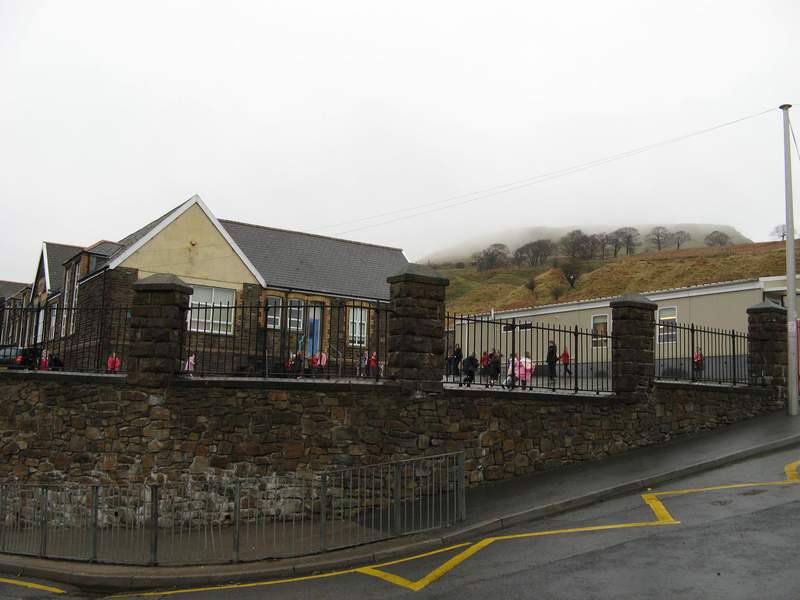
• All the children arrived “safely” in Ebbw Vale and were billeted by 11.00 pm.
• Even in Ebbw Vale air raid sirens would sometimes go off and the children would have to move to shelters.
• From time to time children would be taken on walks up into the mountains.
• Several children were removed from the school and taken home by their parents. The first to leave were Donald and Leonard Sears, removed by their mother on 29 June.
General patterns of evacuation and the diverse experiences of children and mothers during the period of evacuation are vividly described in chapter 2 of Juliet Gardiner’s superb Wartime: Britain 1939-
One of the families who were dispersed and divided during the war were the Davies family, who lived in Arthur Street. I have been given information about the family by Arthur Davies, who was born in 1930. Arthur’s grandparents, Richard and Bessie lived at 6 Arthur Street, Richard working for some time as a barman at the Graving Dock Tavern. Arthur himself lived with his parents and two younger sisters across the road at number 13. Arthur’s father, Arthur senior, had been employed at Tate and Lyle since 1915, while his mother, Maud, worked at the sweet factory James Keiller and Co. On finishing her shift Maud would sometimes smuggle a few sweets out in the leg of her knickers. Various aunts and uncles also lived nearby, though the aunts tended to move away from central Silvertown when they were married.
At the start of the war Arthur was evacuated to Wootton Bassett in Wiltshire with his mother and sisters. Maud’s sister, Ellen Sullivan, and her two sons were evacuated with them. The two women and their children soon became part of the local community, and a couple of years later when Arthur gained a place at a grammar school in Swindon his mother decided she would not return to east London. Arthur’s father, meanwhile, continued to work at Tate and Lyle, staying there until 1960. After the rest of the family were evacuated he remained at 13 Arthur Street. The house took a direct hit in one of the bombing raids and was completely destroyed, but very fortunately Arthur senior was across the road at his parents’ house at the time. The family were not re-
Close neighbours of the Davies family were the Brittons at 11 Arthur Street and the Dales at number 8. Johnny Dale recalls that he had the task of taking Richard Davies’ suit to the local pawnbroker every week and then collecting it on Saturday so that Richard Davies could go out in it. After the bombing in September 1940 the Dale family moved away, and had several further moves before settling in Plumstead.
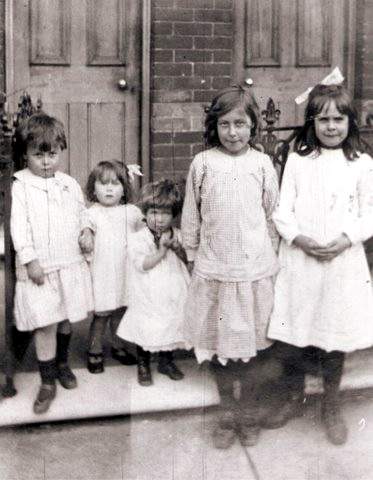
Outside a house, probably in Amelia Street, around 1920. Two of the lasses later became aunts of Arthur Davies.
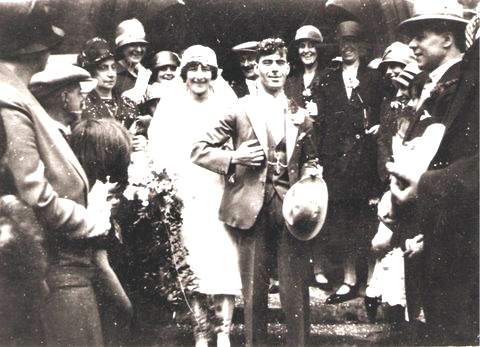
The wedding of Arthur and Maud Davies in 1928. St Marks church can be seen in the background.
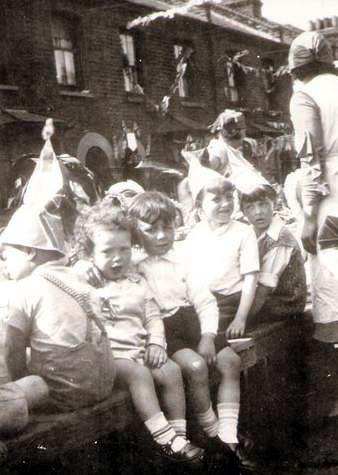
Street party in Arthur Street to mark the silver jubilee of King George V in 1935. Arthur Davies is the lad not wearing a paper hat and with his arm around the shoulder of a lass of similar age.
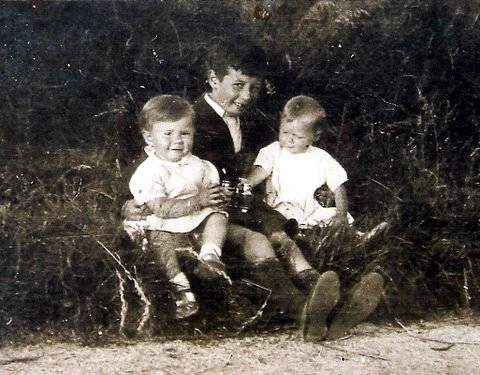
Arthur Davies and his sisters in Wiltshire in 1941, two years after they had been evacuated. The binoculars were the only object recovered from the ruins of their house at 13 Arthur Street.
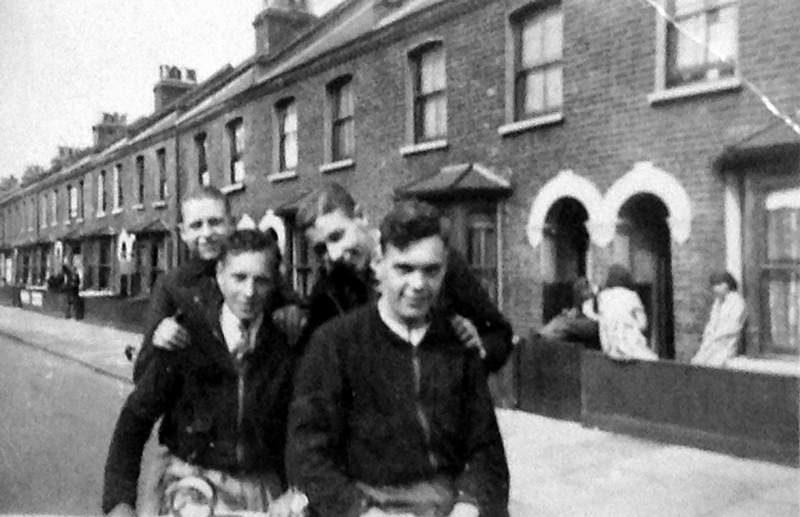
Looking north along Arthur Street, with numbers 13 (the Davies family) and 11 (the Brittons) on the right of the photograph.
Charlie and Billy Britton appear at the front, with Harold Harrison and Johnny Dale behind.
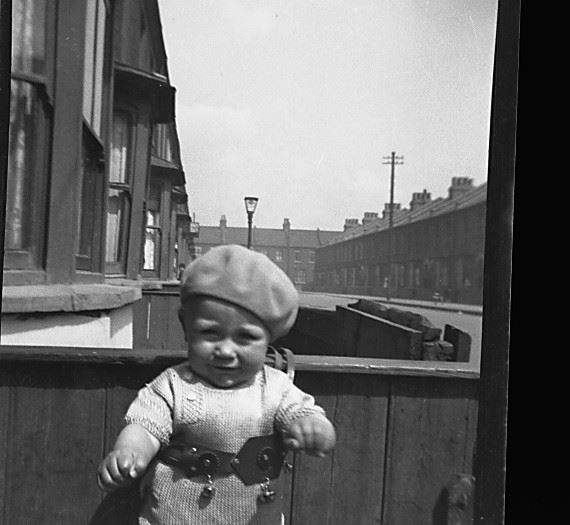
Jimmy Field outside 8 Arthur Street. Jimmy lived in Oriental Road, which can be seen
in the background. The lamp-